Venue Guides
Halekulani vs The Royal Hawaiian: Which Waikiki Hotel Makes the Better Wedding Venue?
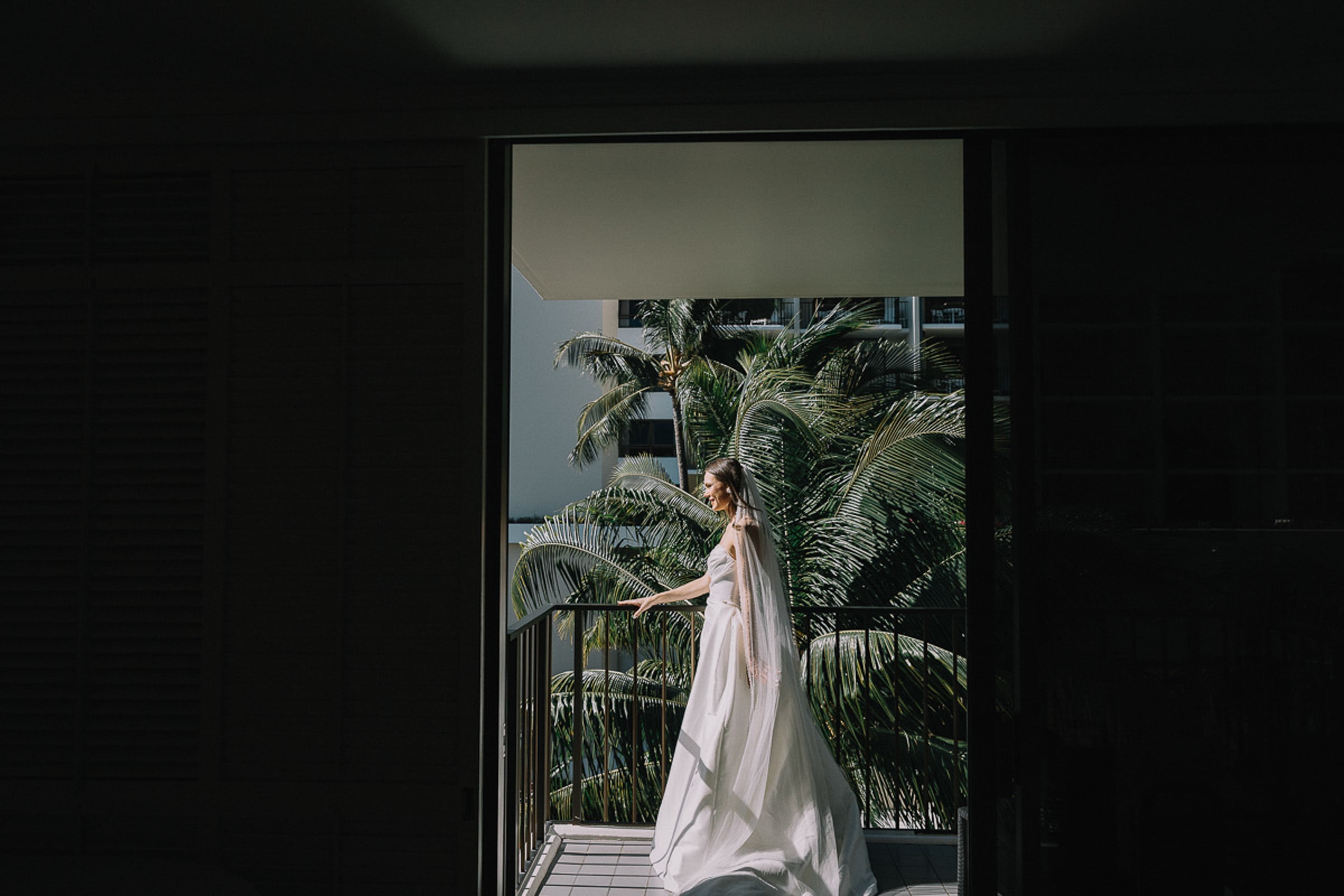
Two of Waikiki's most iconic luxury hotels. Both steps from the same Pacific shore. Both capable of producing extraordinary wedding photographs. But they are fundamentally different — and the right choice depends entirely on who you are as a couple.
The Architecture: White Restraint vs. Pink Iconicity
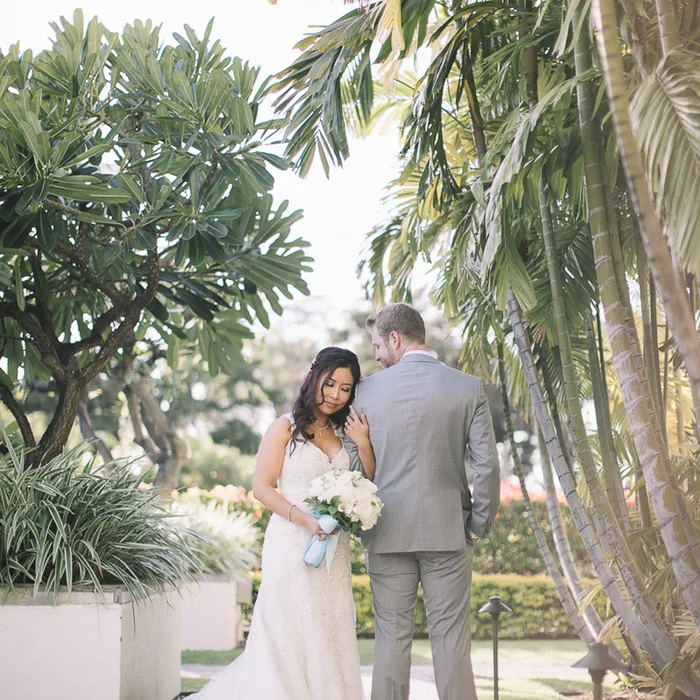
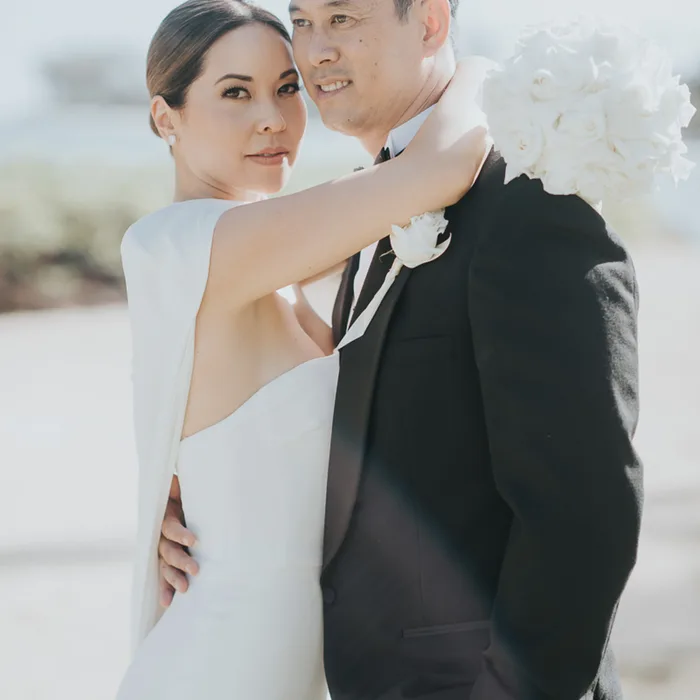
Before you choose a venue, you choose an aesthetic — and Halekulani and The Royal Hawaiian represent opposite ends of the luxury hotel design spectrum. Halekulani is all white: white walls, white-on-white facades, mature palms and plumeria against a pale horizon. The elegance is in what's removed, not what's added. The hotel's signature restraint has been consistent since the 1930s, and it produces a particular kind of photograph — clean, quiet, sophisticated, with couples emerging from backgrounds that feel designed not to compete with them.
The Royal Hawaiian, meanwhile, is emphatically not subtle. Built in 1927 in a Moorish-Spanish Colonial style that was considered exotic even then, 'The Pink Palace of the Pacific' has maintained its signature rose color for nearly a century. The ornate arched windows, the pink tower, the festive energy of the property — all of it creates a backdrop that is, in the most literal sense, one of the most recognizable in Hawaii. Photographs made at The Royal Hawaiian are identifiably from The Royal Hawaiian. That specificity is either a feature or a limitation, depending on what you want your wedding images to say.
Ceremony Locations: House Without a Key vs. Ocean Lawn
Halekulani's most beloved ceremony space is the House Without a Key lawn — a shaded, open-air terrace named for a 1925 Charlie Chan mystery novel, shaded by a vast ancient kiawe tree. The tree itself is a character: its canopy spans much of the ceremony space, filtering the light into something soft and dappled that reads beautifully on camera regardless of the time of day. The Pacific is steps away, but the ceremony space itself has an intimacy that the open beachfront lacks.
The Ocean Lawn at The Royal Hawaiian is an entirely different proposition. Unshaded, directly adjacent to the 1927 building's iconic pink facade, with the open ocean in the foreground and the Waikiki Beach walk behind — the Ocean Lawn is a stage. It is designed to be seen. The backdrop is among the most photographically bold in all of Hawaii: the pink walls catch sunset light with extraordinary intensity, and the resulting images have a visual drama that no amount of florist decoration at Halekulani could replicate. If the House Without a Key is a poem, the Ocean Lawn is a billboard — and we say that as the highest possible compliment to both.
The Photography Question: Where Does the Light Land Better?
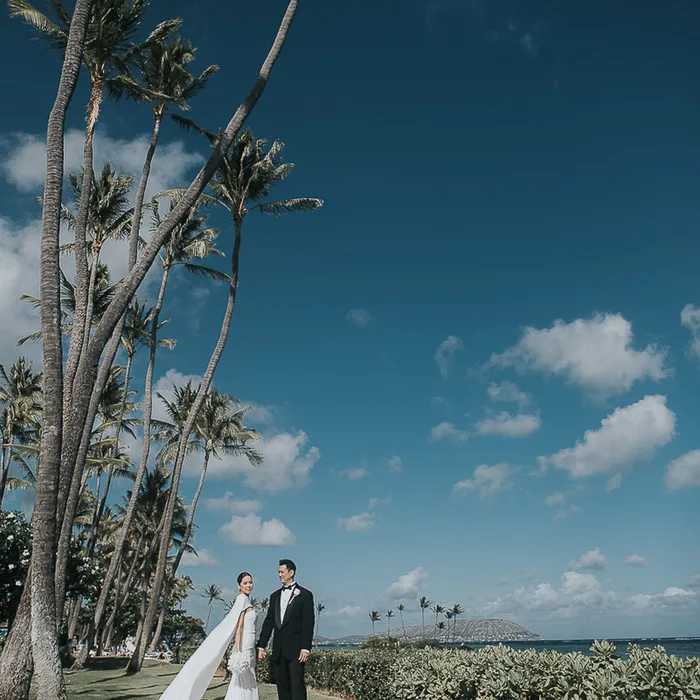
Both hotels face west, which means both catch the full warmth of the Pacific sunset. But they catch it very differently. Halekulani's white surfaces scatter and amplify the warm late-afternoon light into every corner of the property — the gardens glow, the pool reflects, and couples moving through the resort seem to be lit from everywhere at once. There's a quality of omnidirectional light in those final ninety minutes that produces an almost dreamlike quality in photographs.
At The Royal Hawaiian, the sunset light is more directional — it strikes the pink facade with significant intensity, and the resulting contrast between the glowing pink building and the blue-gold sky is genuinely spectacular. The challenge, which we've navigated many times, is that this same directional light creates contrast that requires careful exposure management: the couple in front of a glowing pink wall at sunset is a challenging metering situation that rewards an experienced photographer and punishes an inexperienced one. The Hotel's Ocean Lawn also gets busy in the pre-sunset hour, because half of Waikiki's guests are watching the sunset from the same direction. We always account for this in our timeline planning.
Logistics, Scale, and the Day-Of Experience
Halekulani is a boutique property by luxury hotel standards — smaller than The Royal Hawaiian, more intimate in its service culture, and deliberately less busy. This translates directly to the wedding day: there are fewer crowds at the ceremony spots, the staff are accustomed to moving quietly and efficiently around photography, and the overall pace of the property makes for a calmer, more composed day. If you are planning a wedding of 20 to 80 guests with a focus on intimacy and editorial refinement, Halekulani's scale is almost perfectly calibrated to the task.
The Royal Hawaiian is a larger property with significantly higher guest traffic — it is, after all, one of the most famous hotels on one of the most visited beaches in the world. Managing the day-of experience requires more advance coordination with the hotel's events team, and we always build extra buffer into Royal Hawaiian timelines to account for the ambient energy of the property. For couples who thrive on that energy — who want their wedding day to feel like an event in the fullest sense — The Royal Hawaiian's scale works in their favor.
Our Honest Recommendation After 20+ Years Shooting Both
If you are drawn to restraint, to quiet sophistication, to photographs that feel timeless rather than spectacular — choose Halekulani. If you want your wedding images to have the unmistakable visual signature of one of the world's most iconic buildings, if you want photographs that announce an address as confidently as the people in them — choose The Royal Hawaiian.
Both are exceptional. Both produce photographs we are genuinely proud of every time. The question is not which venue is better but which venue is better for you. And that question, in our experience, answers itself the moment you walk through both lobbies. Your instinct on arrival is almost always correct.
Written by
Jason Visionari

Ready to discuss your wedding?
Visionari specializes in luxury Hawaii wedding photography. Reach out to discuss availability for your date.
Inquire About Availability