Planning Guides
Hawaii Elopement Photography: The Complete Guide to an Intimate Island Wedding
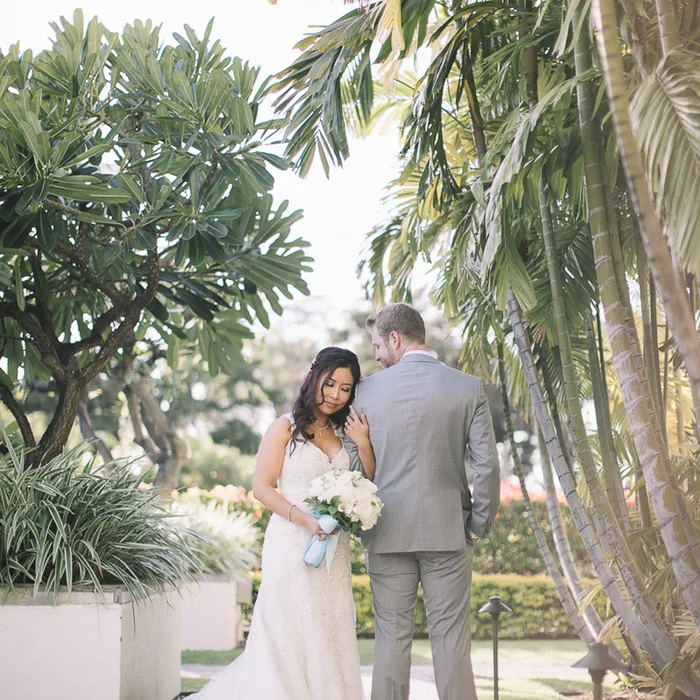
The couples who choose to elope in Hawaii consistently produce the most creatively free photography we make all year. Without a timeline built around a hundred guests, without a program to follow, without the constraint of a venue's standard ceremony package — the photographs that result look like nothing else in our portfolio.
Why Hawaii Is the World's Best Elopement Destination
The word 'elopement' once implied urgency and secrecy — two people slipping away from a disapproving family. That meaning has largely dissolved. What couples mean today when they say they want to elope is something different: they want a wedding that is entirely and unapologetically about the two of them, in a place that matters to them, without the infrastructure of a traditional event getting between their day and their photographs.
Hawaii works for this better than almost anywhere in the world for a set of reasons that are specific rather than generic. The islands are legally straightforward: Hawaii marriage licenses are available to any two people who appear in person at a Hawaii Department of Health licensing office, regardless of residency or citizenship, and they are valid immediately — no waiting period. The diversity of landscape within a single island means that a committed couple can move from a beach to a cliff to a waterfall to a rainforest in a single afternoon. And Hawaii's wedding vendor ecosystem — officiant networks, florists, planners who specialize in micro-events — is exceptionally developed for exactly this kind of event.
Choosing Your Island: Where Different Elopement Aesthetics Come Alive
The island you choose determines the aesthetic of your elopement photographs as much as any other decision you'll make. Each island has a visual character that is genuinely distinct.
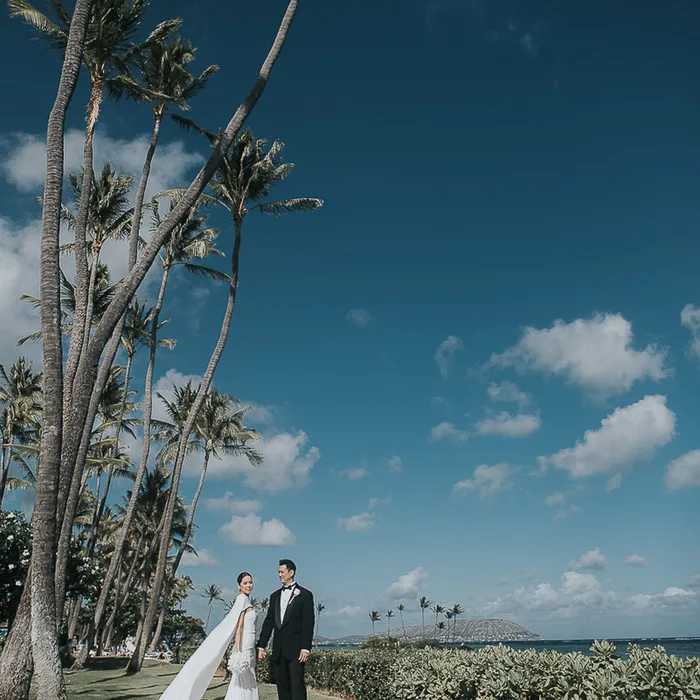
Oahu is the island with the most range. Diamond Head, the Ko'olau Range, the North Shore beaches, and the quiet elegance of Waikiki's luxury hotels — the island can produce editorial, glamorous, wild, or serene images depending entirely on where you go. For couples who want hotel luxury alongside nature access, Oahu is the most versatile choice.
Maui is the romantic island. The Road to Hana, the sunrise at Haleakala crater, the lavender fields of Kula, the resort elegance of Kapalua and Wailea — Maui images have a consistent warmth and visual luxury that reads immediately as 'destination wedding' in the most aspirational sense.
Kauai is the wild island — the choice for couples who want the landscape to overwhelm the frame. If you want photographs where the setting is so dramatic it barely seems real, Kauai is almost certainly your answer.
The Big Island is the island of contrasts: black lava fields against turquoise ocean, ancient petroglyphs, the Kohala Coast's resort luxury against one of the most visually extreme landscapes on earth. For couples who want images that exist nowhere else in the world — literally, photographically nowhere else — the Big Island's lava fields near Kalapana or the Kohala Coast provide that.
Legal Requirements: How to Actually Get Married in Hawaii
Hawaii's marriage license process is among the most accessible in the United States, which is one reason the island state has become such a popular destination wedding location. Here is what you need to know:
Both parties must appear together in person at a Hawaii Department of Health marriage licensing agent's office. These offices exist on all four main islands. No waiting period — the license is effective immediately upon issuance and valid for 30 days. No Hawaii residency requirement. No US citizenship requirement — international couples can marry legally in Hawaii with appropriate identification. The license fee is approximately $65 (confirm current fee when planning). You will need a government-issued photo ID for each party. Divorced individuals need to know the exact date of their most recent divorce, but documentation is typically not required.
Once you have your license, you need a licensed officiant — in Hawaii, this includes ordained ministers, judges, and certain other officials. The State of Hawaii maintains a list of licensed officiants. For elopements in non-venue locations (beaches, cliffs, botanical gardens), check permit requirements in advance — many state and county parks require a permit for ceremonies, even small ones. Unpermitted ceremonies on public lands can result in citations and, worse, interrupted photography.
How Elopement Photography Differs — and Why It Produces Our Favorite Work
We photograph approximately 40 weddings per year. Of those, perhaps eight to ten are elopements or intimate micro-weddings. Those eight to ten events produce a disproportionate share of our portfolio's strongest images — and after fifteen years of asking ourselves why, we think we understand it.
Elopement photography is slower. There is no timeline pressure from a hundred guests waiting for cocktails. There is no coordinator's schedule to follow, no mother of the bride who needs to be included in a group portrait by 4:45. We have time to wait for the light, to move to a better position, to ask the couple to do something again because we see a better frame from six feet to the left. The resulting images are made rather than captured — there is a considered quality to them that event photography, however skillful, rarely achieves.
Elopement couples are also, typically, less performance-anxious than couples at large weddings. Without an audience, most people relax in front of a camera more quickly. We see more genuine expressions, more spontaneous laughter, more of the private quality of two people who are genuinely in love rather than aware of being watched by everyone they know.
A Practical Planning Timeline for Your Hawaii Elopement
6–12 months before: Choose your island and research photographers. For a Visionari elopement booking, we require at least six months lead time for our primary dates; peak season (May–October) books earlier. Confirm photographer availability before booking any flights or accommodations.
3–6 months before: Book your photographer, officiant, and any florals. Research permit requirements for your intended ceremony location — some of Oahu's most popular beach spots (Lanikai, Waimanalo) and state parks require permits that book out months in advance. Book accommodations.
1–3 months before: Obtain your Hawaii marriage license (remember it is valid for 30 days, so you can't get it too early). Confirm all vendors. Create a rough timeline for the day — for a typical Visionari elopement, we allocate 4–6 hours: arrival and getting ready, ceremony, portraits at 2–3 locations, sunset portraits if timing allows.
The week of: Confirm with your photographer what to expect weather-wise. We always communicate Kauai and North Shore conditions a few days in advance. Finalize the day's order of locations based on weather and light forecast.
The day itself: The only rule is to be present. The photographs come from that.
Written by
Taka Visionari

Ready to discuss your wedding?
Visionari specializes in luxury Hawaii wedding photography. Reach out to discuss availability for your date.
Inquire About Availability