Venue Guides
Waikiki & Honolulu Wedding Photography: Venues, Light, and Local Knowledge
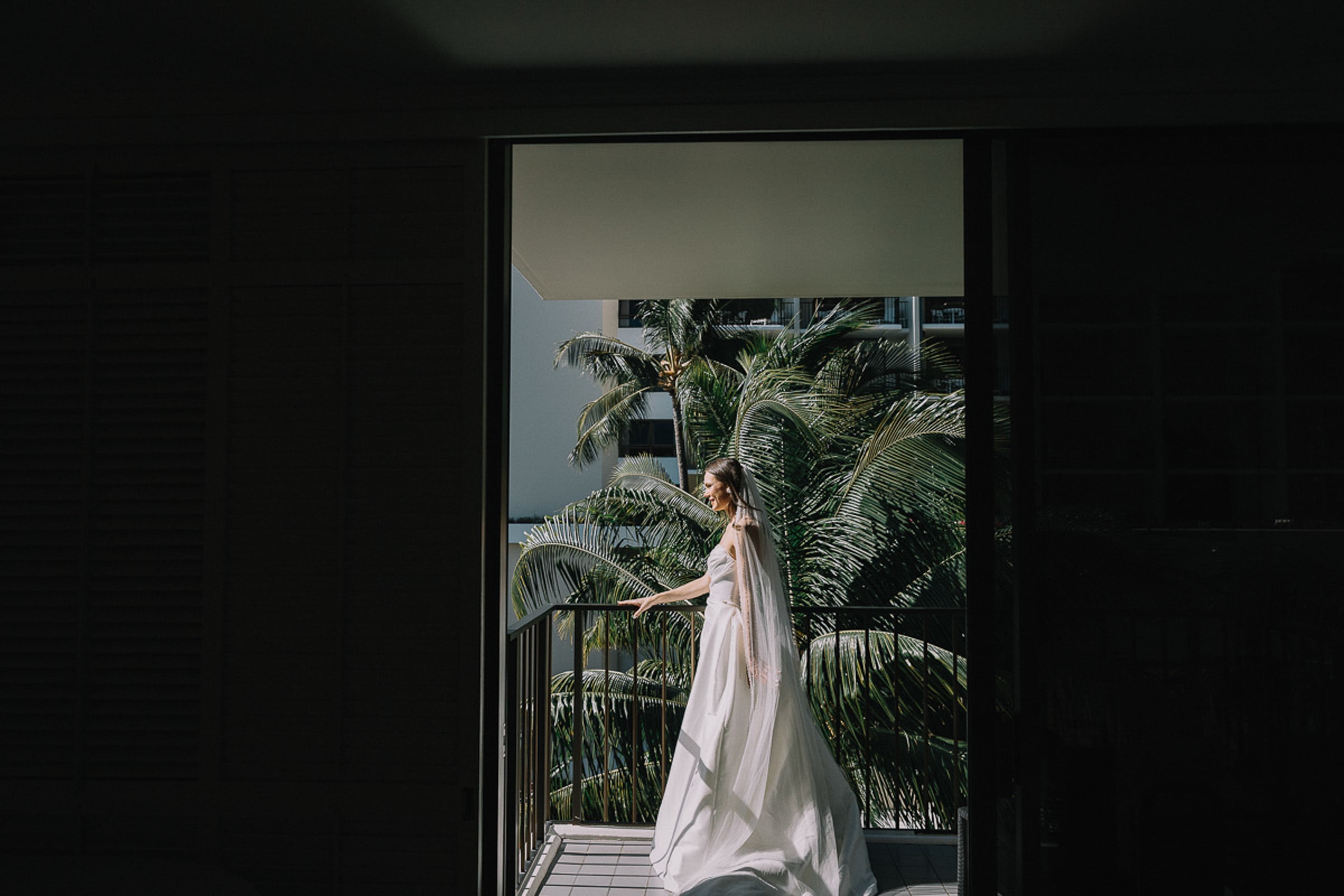
More wedding photography has been produced in this two-square-mile pocket of Oahu than anywhere else in the Pacific. But Waikiki is not a simple backdrop — it is technically demanding in ways that only deep local knowledge can navigate.
Why Waikiki Remains the Epicenter of Hawaii's Wedding Photography
Waikiki is a two-square-mile pocket of Oahu where more wedding photography has been produced than anywhere else in Hawaii — and arguably more than anywhere else in the Pacific. The concentration of luxury hotels within walking distance of a Pacific beach, combined with ease of guest logistics and the recognizability of the backdrop (Diamond Head, the turquoise waters of the bay), has made it the default setting for Hawaii destination weddings for over a century.
But Waikiki is not a simple backdrop. It is technically demanding in ways that catch photographers off guard: the sun rises over the Ko'olau Range to the east and arcs southward, meaning most ceremony spaces face east or southeast and receive direct harsh light from late morning through mid-afternoon. The beach is oriented northeast-to-southwest, which means southwest-facing ceremonies in the afternoon are shooting into the sun from the guests' perspective — the classic beach wedding photography challenge that only deep venue knowledge can navigate.
For photographers, Waikiki's challenges are also its rewards: the same light that is difficult to manage at noon becomes extraordinary at 5:30pm, when Diamond Head silhouettes against an orange sky and the lagoon catches the last reflection off the Halekulani facade.
The Halekulani: The Finest Wedding Photography Venue in Waikiki
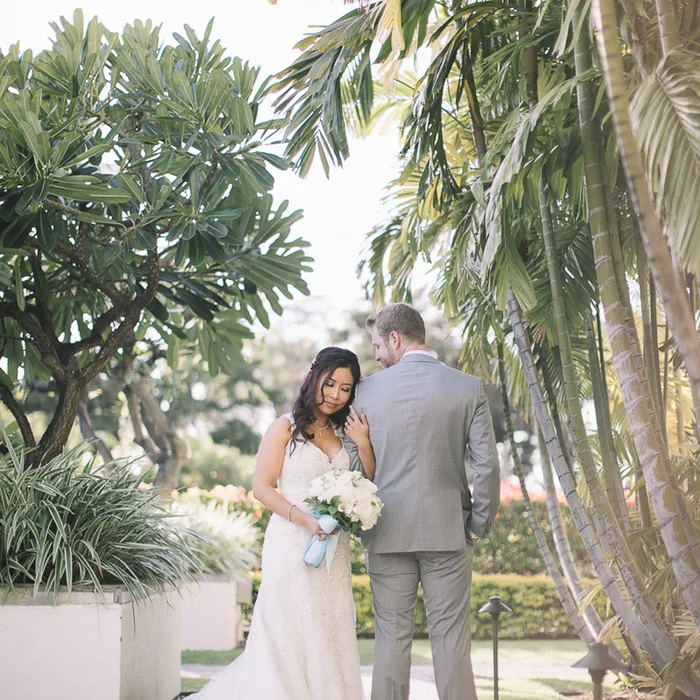
In our assessment, the Halekulani is the finest wedding photography venue in Waikiki. This is a considered opinion based on decades of work there: the property's combination of white architecture, mature plumeria and palm plantings, and the specific orientation of its ceremony spaces relative to Diamond Head and the Pacific creates conditions simply not reproducible elsewhere on this strip of coastline.
The House Without a Key — the Halekulani's iconic open-air bar and ceremony area — sits on the resort's beachfront terrace at a 45-degree angle relative to the shoreline. This geometry means that in late afternoon, light catches the white tablecloths, white attire, and white architectural columns at the most favorable angle: not flat, not direct, but soft-edged and warm. The result is a quality of natural reflection that acts almost like a fill light, separating subjects from background without the signatures of artificial illumination.
Practically, the Halekulani's events team is exceptionally coordinated. Access for photography vendors is clearly defined, timelines are communicated well in advance, and the property's willingness to coordinate on lighting-sensitive timing decisions is greater than at any other Waikiki venue we work with regularly.
The Royal Hawaiian: Managing the Pink Palace's Photographic Demands
The Royal Hawaiian — the Pink Palace of the Pacific — is one of the most visually recognizable hotels in the world, and this iconicity creates a specific photographic challenge: the pink. The property's famous Spanish-Moorish facade is a saturated magenta-pink that competes with almost every other color in the frame, requires careful exposure management, and can cast a visible pink bounce into shadow areas if shooting near the building in direct sun.
Managing the Royal Hawaiian's signature color is a skill developed over years of work there. The key is directional light: the building's south-facing beach frontage means ceremony spaces on the Ocean Lawn receive direct southwest afternoon sun. The best images come when the sun has passed the building's vertical face and the light arrives from the side rather than directly overhead. In this configuration, the pink facade becomes an asset — a warm reflective surface that adds ambient color — rather than a liability.
For all its visual complexity, the Royal Hawaiian has one of the simplest venue logistics of any major Waikiki hotel. The events team is experienced with photography vendors, and the Ocean Lawn fully set for a ceremony, with the pink facade as the backdrop, produces one of the most immediately distinctive wedding images in Hawaii — the kind that tells a viewer in the first second exactly where this wedding took place.
The Moana Surfrider: Banyan Court and Waikiki's Oldest Wedding Tradition
The Moana Surfrider opened in 1901 and is Waikiki's oldest hotel. Its Banyan Court — a historic courtyard centered on a massive banyan tree planted when the hotel opened — is one of the most photographically distinctive ceremony spaces in Hawaii. The tree, now over 120 years old and spanning the entire courtyard, provides dappled shade, organic structure, and a sense of history that newer resort venues cannot manufacture.
The Moana's beachfront — the hotel sits directly on Waikiki Beach with a view of Diamond Head — provides a counterpoint to the courtyard's intimacy. Sunset portraits on the Moana's beach, with the hotel's colonial white facade in the background, produce images that read immediately as quintessentially Hawaiian: historical architecture, Pacific light, and Diamond Head in one frame.
The Banyan Court's primary photographic challenge is light management: the canopy creates strong contrast between dappled sunlight and shade. Managing this exposure range requires careful timing — shooting when the sun is at an angle that minimizes direct spotlighting through the leaves — or controlled supplemental light. We prefer the timing approach when possible, using the filtered morning light or the softened late-afternoon window before the canopy shadows merge into darkness.
Beyond the Resort: Honolulu's Hidden Wedding Photography Locations
Waikiki's hotels are the most obvious choice for Oahu wedding photography, but Honolulu's wider landscape contains locations that produce images of equal or greater power — with significantly fewer crowds.
Diamond Head State Monument: The summit trail of Diamond Head — properly called Lē'ahi — requires advance reservation, but the views from the crater rim looking back toward Waikiki are among the most geographically dramatic in Hawaii. We have photographed elopements and editorial portrait sessions here at sunrise, when the reservation process is simpler and the light most favorable. Ceremonies require a permit from DLNR in advance.
Nu'uanu Pali Lookout: At 1,200 feet elevation, the Pali Lookout offers a completely different visual character — the windward coast with clouds rolling over the Ko'olau cliffs produces images that are cinematic in a geological rather than resort sense. Best visited between 8–10am before trade winds intensify.
Downtown Honolulu and Chinatown: For couples whose aesthetic is urban, editorial, and documentary rather than tropical-resort, downtown Honolulu's architecture — including the historic district around Merchant Street, Iolani Palace, and the Chinatown gateway arches — offers a visual language rare in Hawaii wedding photography and increasingly sought after by couples looking for something genuinely different.
Planning Your Waikiki Wedding Timeline for Maximum Photography
The most common mistake in Waikiki wedding photography planning is the 4pm ceremony. It seems logical — late afternoon, near golden hour — but the math is wrong. A 4pm ceremony start puts the ceremony itself in the most difficult light of the day: high enough that shadows are still harsh, low enough that westward backlight is beginning to intensify. The ceremony runs 20–30 minutes, putting the couple in portraits by 4:30pm — still a full hour before actual sunset.
Our recommendation for Waikiki: either an 11am ceremony (soft morning light before the midday overhead period) or a 5:30–6pm ceremony start specifically targeted at the golden hour and dusk window. The 5:30pm ceremony end coincides with the most extraordinary natural light available in Waikiki, and portrait sessions in the 6:00–6:30pm window consistently produce our most spectacular work of the year.
For winter weddings when sunset arrives around 6pm, shift everything ninety minutes earlier. The mechanics of the light don't change — only the clock times that correspond to them. Whatever timing you choose, tell your photographer your ceremony end time and work backward from there — the photography should drive the timeline, not accommodate it.
Written by
Taka

Ready to discuss your wedding?
Visionari specializes in luxury Hawaii wedding photography. Reach out to discuss availability for your date.
Inquire About Availability